

Every new year, month, or even Monday morning, millions of us sit down with a fresh notebook and a surge of optimism. We write down ambitious targets: “get fit,” “save money,” “read 50 books,” or “land a dream promotion.” In those initial moments, anything feels completely possible. Yet, just a few short weeks later, that initial wave of excitement begins to fade. The shiny new habits get pushed aside by busy workdays, unexpected chores, and sheer fatigue. Before long, those ambitious goals quietly slip to the absolute bottom of our daily priorities.
The underlying issue here is rarely a lack of talent, intelligence, or desire. Instead, it stems from the flawed way we typically frame and pursue our ambitions. Traditional goal-setting often treats human beings like robots—assuming that once a decision is made, perfect execution will automatically follow. But real life is messy, unpredictable, and constantly demanding. To actually make lasting progress, we need practical, human-centered goal-setting hacks that work alongside our natural psychology rather than fighting against it.
Start With What You Actually Want (Not What You Think You Should Want)

Before writing down a single objective on paper, take a quiet moment to ask yourself a crucial question: Why do I genuinely want this? This sounds simple, but it is actually where most people stumble. Far too many of us chase goals simply because they look impressive on social media, align with family expectations, or sound like something a successful adult “ought” to be doing.
A goal that lacks deep personal resonance will inevitably crumble at the very first sign of difficulty. For example, setting a broad objective like “I want to become successful” is far too vague to inspire action. You need to define what success actually means to your unique life. Does it mean having more financial freedom, enjoying flexible hours to spend time with family, or mastering a difficult creative skill? When your targets reflect your authentic personal values, staying committed through tough times becomes vastly easier.
Break Intimidating Dreams Into Manageable Daily Steps
Massive dreams are wonderful for inspiration, but they are notoriously terrible for daily execution. Looking at a huge, distant objective—like writing a 300-page book or running a full marathon—can easily trigger psychological resistance and heavy procrastination. The sheer distance between where you stand today and where you want to end up feels utterly overwhelming.
The secret to overcoming this mental paralysis is micro-goal setting. Instead of constantly obsessing over the final outcome, break the journey down into tiny, bite-sized tasks that feel almost too easy to fail.
- Instead of saying “I need to write a book,” commit to writing just 200 words every morning.
- Instead of resolving to “get perfectly fit,” commit to a simple 15-minute walk three times a week.
- Instead of promising to “master a new language,” spend five minutes a day reviewing vocabulary flashcards.
These small, consistent wins build momentum. Over weeks and months, those modest daily actions quietly accumulate into massive, life-changing results.
Make Your Targets Specific and Deadlined
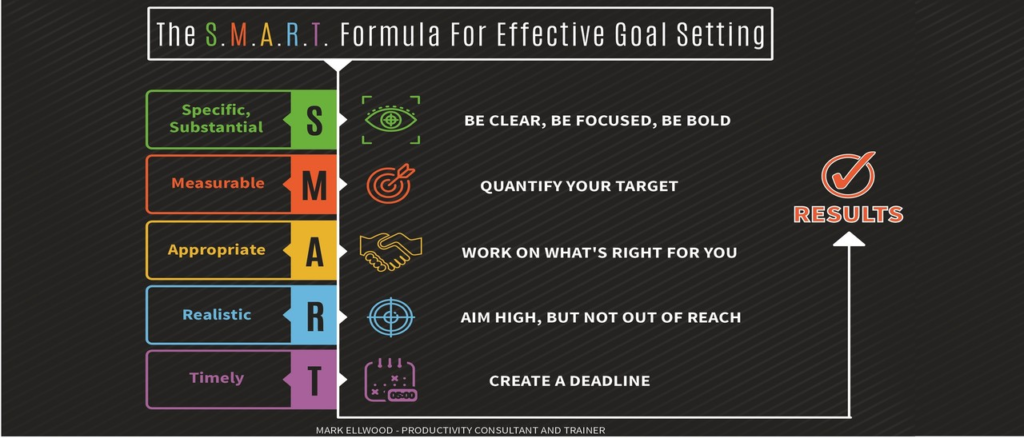
Vague intentions yield vague results. A statement like “I want to save more money this year” is a well-meaning hope, but it gives your brain zero structural guidance. It doesn’t tell you how much to save, where to put it, or when the task is supposed to be completed.
To turn a vague wish into an actionable plan, make it specific, measurable, and time-bound. Transform “I want to save money” into “I want to save ₹50,000 over the next six months.” Suddenly, you have a clear destination. You can easily calculate that you need to set aside approximately ₹8,333 each month, or around ₹2,083 every week. Having concrete numbers allows you to adjust your daily spending habits accordingly and track your progress with absolute clarity.
Similarly, every worthwhile objective needs a realistic target deadline. Without a designated timeframe, tasks naturally expand to fill whatever time is available, often getting pushed indefinitely into “someday.”
Focus on One or Two Priorities at a Time
A classic trap that high-achievers fall into is trying to completely revamp their entire lives overnight. They decide to simultaneously start waking up at 5:00 AM, cooking healthy meals, exercising daily, learning guitar, reading two books a week, and cutting out all sugar. While this enthusiasm is admirable, it quickly leads to severe burnout and decision fatigue.
Human willpower is a finite daily resource, not an infinite generator. When you attempt to change every single area of your life at once, you spread your focus far too thin. Instead, pick just one or two key priorities to focus on for the next 60 to 90 days. Pour your energy into making those specific actions automatic. Once those behaviors turn into effortless daily habits, you can comfortably introduce a new objective without overloading your lifestyle.
Build Simple Systems Instead of Relying on Willpower
Motivation is an unreliable friend. Some days you wake up energized, inspired, and ready to conquer the world; other days, you feel tired, stressed, and completely unmotivated. If your progress depends entirely on “feeling like it,” your consistency will inevitably suffer.
This is why top performers rely heavily on bulletproof systems and habits rather than raw willpower. A system is an intentional routine or environmental setup that makes doing the right thing as frictionless as possible.
| Goal Objective | Willpower-Based Approach (Fails Easily) | System-Based Approach (Succeeds Consistently) |
| Exercise Regularly | Forcing yourself to go to the gym after a exhausting 10-hour workday. | Packing your gym bag the night before and placing it directly by the front door. |
| Eat Healthier | Trying hard to resist buying junk food when you feel hungry and tired at night. | Removing sugary snacks from your kitchen pantry and keeping fresh fruit visible on the counter. |
| Read More Books | Promising yourself you will read for an hour before going to sleep. | Placing a physical book right on your pillow every morning when you make your bed. |
| Save Money | Trying to remember to manually transfer leftover cash at the end of the month. | Setting up an automatic bank transfer on payday that moves savings before you can spend it. |
Use the “Five-Minute Rule” to Beat Procrastination
Starting a tough task is almost always the hardest part. Once you actually get moving, friction drops significantly, and momentum takes over. When you find yourself continually putting off an important task, leverage the simple psychological trick known as the Five-Minute Rule.
Tell yourself that you only have to work on the task for five short minutes. If you want to study, open the book and read for five minutes. If you need to clean a messy desk, clean for five minutes. If you need to draft an important report, write for five minutes. Tell yourself that after those five minutes are up, you are completely free to stop if you want to.
Crucially, about 80% of the time, once you overcome that initial hurdle of starting, you will naturally choose to keep going. The goal of this hack isn’t to complete the entire job in five minutes—it is simply to break through the paralyzing barrier of initial resistance.
Track Your Progress Visually
There are few things as deeply satisfying to the human brain as seeing tangible proof of personal growth. When you work toward a long-term goal without tracking your efforts, it can easily feel like you are walking through sand and making zero headway.
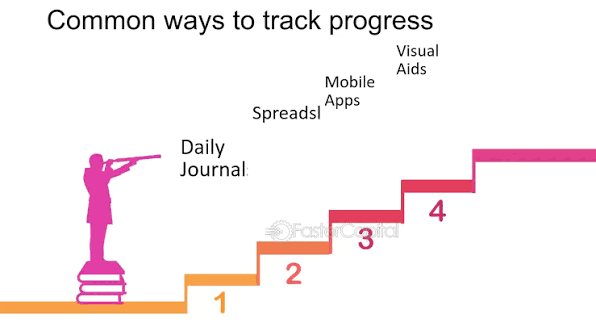
Keep a simple visual habit tracker to log your consistency. This can be as elaborate as a dedicated mobile app or as basic as a physical wall calendar where you mark a big red “X” for every day you complete your target habit. Seeing a unbroken chain of marks creates a powerful psychological urge to keep the streak going. It provides an immediate dopamine boost that rewards your effort long before the ultimate, long-term result actually materializes.
Celebrate Small Victories Along the Way
Many people treat goal achievement as an “all-or-nothing” enterprise. They believe that unless they hit 100% of their target on exact schedule, they have somehow failed. This harsh mindset creates unnecessary frustration and destroys long-term motivation.
Instead, make a deliberate point to notice and celebrate incremental progress. If your target was to workout four times this week and you managed to go three times, that is still three workouts more than zero! Acknowledge the genuine effort you put in. Recognizing small wins reinforces a healthy, positive relationship with self-improvement, making it far easier to stay engaged over months and years.
Anticipate Setbacks and Apply the Two-Day Rule

Life will inevitably throw unexpected curveballs your way. You might catch a cold, get hit with an urgent deadline at work, have to care for a family member, or simply experience an off day where everything goes wrong. Falling off track occasionally is not a sign of failure—it is simply a normal part of being human.
The fatal mistake is allowing a single missed day to trigger a mental spiral of guilt, leading you to abandon the effort entirely. To guard against this, adopt the practical Two-Day Rule: Never miss your chosen habit for two consecutive days.
Missing one day is an isolated accident or a necessary break. Missing two days in a row, however, is the beginning of a brand-new, unwanted habit. If life forces you to skip a workout or overspend your budget today, make it your absolute top priority to get right back on track tomorrow.
Design Your Environment for Automatic Success
We like to believe that we are in total conscious control of our daily decisions, but the truth is that our immediate environment heavily dictates our daily behavior. If your smartphone is lying right next to your keyboard while you try to work, you will inevitably check notifications. If unhealthy snacks are at eye level in the kitchen, you will eat them when stressed.
Instead of fighting your environment with raw self-control, alter your surroundings so that good choices become the path of least resistance:
- To reduce screen time: Place your phone in another room or inside a drawer while working on high-priority tasks.
- To focus better: Keep your desk completely clear of clutter, leaving only the materials required for your current project.
- To drink more water: Keep a filled water bottle directly on your desk throughout the entire day.
By designing a supportive physical environment, you eliminate the constant need for willpower, making success feel almost automatic.
Review and Adjust Your Targets Regularly
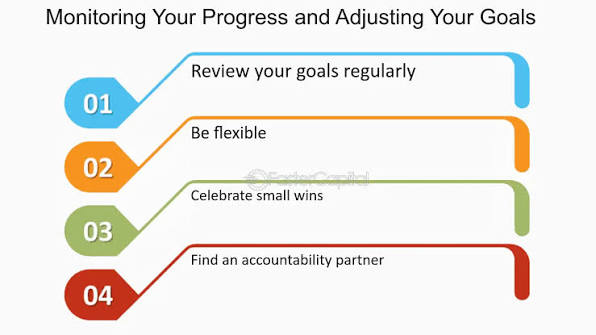
Your goals should never be carved in stone; they ought to be living, breathing frameworks that adapt as your life evolves. What felt like a vital priority six months ago might no longer align with your current reality, career path, or personal values.
Schedule a quick 15-minute monthly review session with yourself. Reflect on what is working well, identify what is causing friction, and ask yourself if your current targets still make sense. Modifying or dropping a goal that no longer serves you isn’t quitting—it is a wise, realistic adjustment that frees up valuable energy for things that actually matter.
Stop Comparing Your Timeline to Everyone Else’s
In our modern hyper-connected world, social media exposes us to a continuous highlight reel of other people’s achievements. You see peers buying houses, launching successful businesses, getting promoted, or traveling the world, and it becomes painfully easy to feel like you are somehow falling behind.
Remember that you are comparing your messy, behind-the-scenes reality to someone else’s carefully curated end product. You rarely see the years of silent struggle, repeated failures, and quiet sacrifices that made their visible success possible. Focus exclusively on your own personal growth trajectory. The only meaningful question to ask yourself is: Am I making steady progress compared to where I was six months ago?
Focus on Steady Progress Over Flawless Perfection

Real transformation is not the result of one heroic, perfect effort. It is the cumulative effect of hundreds of small, imperfect, but consistent decisions made day after day, week after week. Accept that there will be slow days, messy weeks, and occasional missteps. As long as your overall trajectory continues moving forward, you are winning the long game.
The pursuit of absolute perfection is the ultimate enemy of sustainable achievement. When you demand flawless execution, any minor mistake feels like a disaster, leading many people to throw in the towel completely.
Core Principles for Lasting Success
- Clarity First: Define precisely what you want, why you want it, and when you plan to achieve it.
- Break It Down: Reduce intimidating objectives into tiny, manageable daily actions.
- Build Smart Systems: Design simple habits and environments that do not rely on raw willpower.
- Protect Consistency: Follow the Two-Day Rule to prevent temporary slip-ups from turning into permanent abandoned routines.
- Embrace Imperfection: Prioritize steady, long-term progress over short-lived perfection.
Frequently Asked Questions
What should I do if I completely lose motivation halfway through a goal?
Losing initial motivation is entirely normal. Shift your focus away from waiting to “feel inspired” and focus instead on executing your basic daily system. Reduce the daily requirement to a tiny, easy task (like working for just five minutes) until your natural momentum slowly returns.
How many goals should I realistically work on at the same time?
It is best to focus on just one or two major priorities at any given time. Trying to change too many areas of your life at once causes heavy decision fatigue. Once your initial goals turn into automatic daily habits, you can gradually introduce new objectives.
Is it okay to give up on a goal if my circumstances change?
Yes, absolutely. Giving up on a goal that no longer aligns with your life, values, or financial reality is a smart, strategic decision, not a personal failure. Periodically reviewing and updating your priorities ensures you waste zero energy on obsolete targets.
How do I stay accountable when working on personal goals?
You can build strong accountability by tracking your daily habits visually on a calendar, sharing your specific targets with a trusted friend or mentor, or setting up automated systems (like automatic bank transfers for savings goals) that remove human error entirely.